
Fall 2026 Newsletter
Arm in Arm Weekend November 15
at St. Joan of Arc
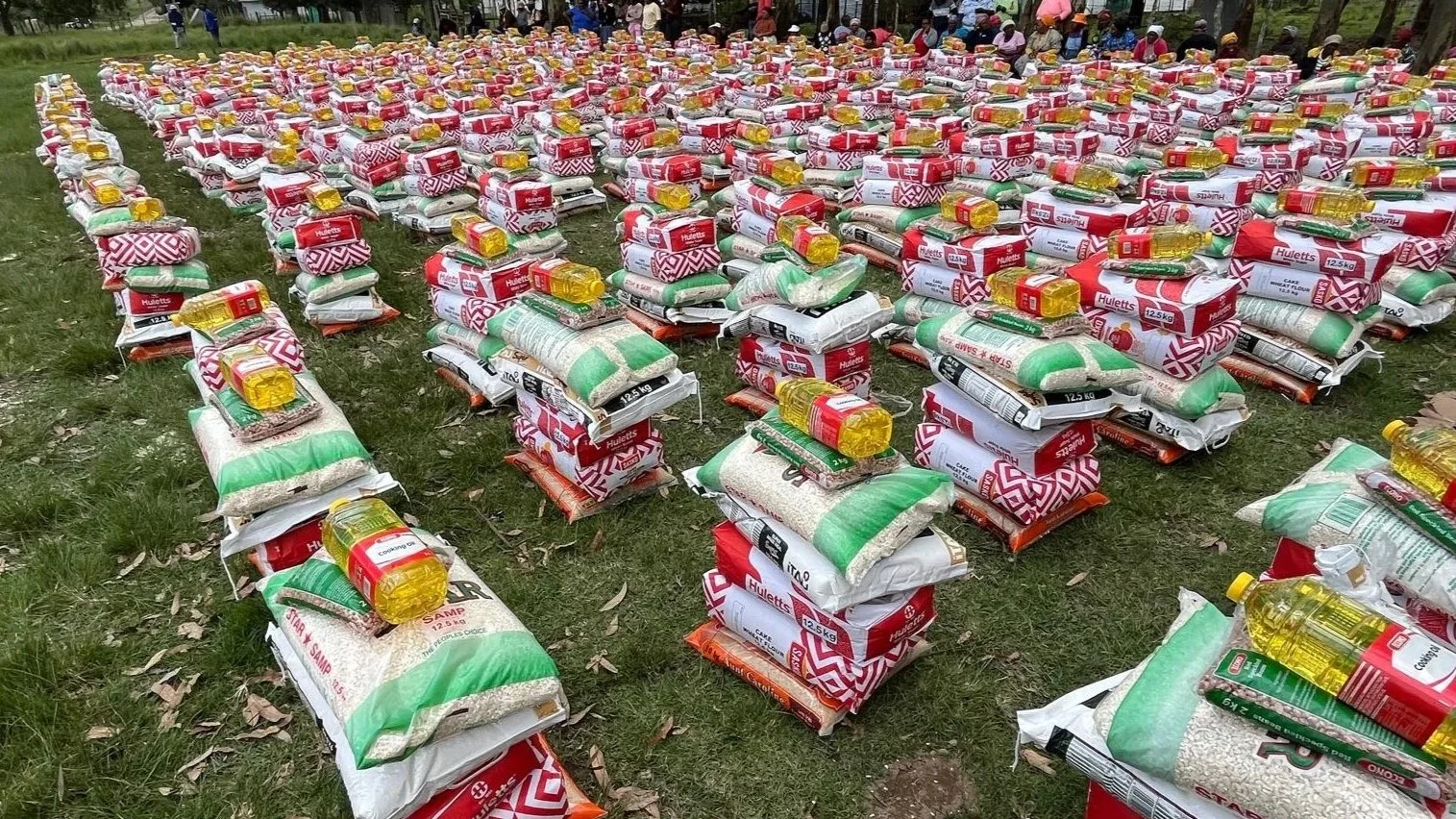
Be sure to join us at St. Joan of Arc on Sunday, Nov. 15, for Arm in Arm Sunday. It’s our annual opportunity for all to hear from Jim Cassidy, Chair Emeritus, and Ed Luterbach, Board Chair, on the latest developments in AIAIA’s work in South Africa. Masses will be 9am and 11am in the gym. This is a great opportunity to introduce friends curious about our work. The second collection that day will benefit Arm in Arm in Africa exclusively.
AIAIA Teaming with U of M
Arm in Arm is teaming up with the Carlson Ventures Enterprise program at the University of Minnesota in an effort to expand our revenue sources. We are working with a team of five graduate/ undergraduate students who selected AIAIA as their Fall Quarter project.
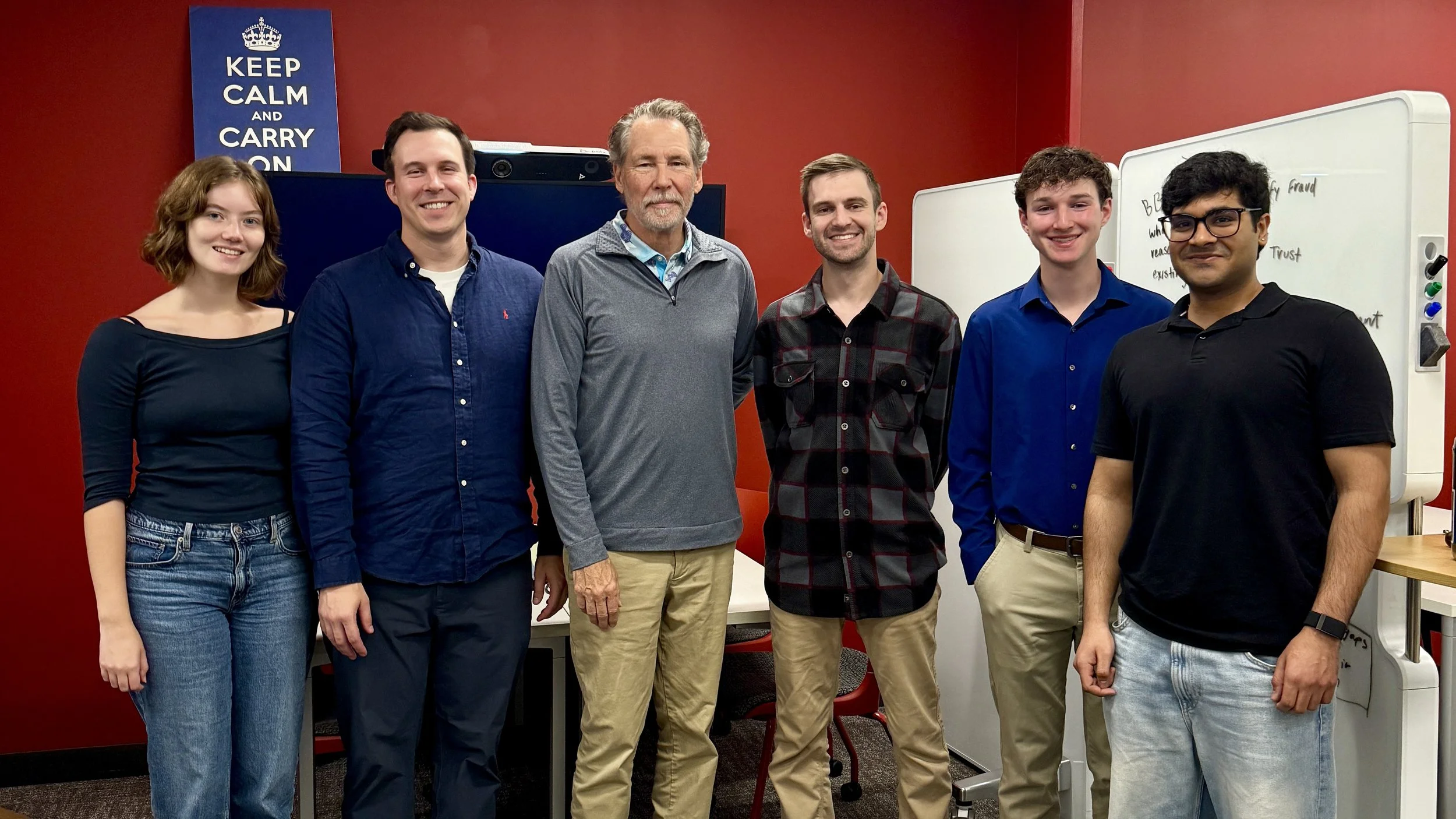
AIAIA Team at Carlson School of Business (l-r): Isabelle Hintges, Will Brumleve, Toby Nord (CVE Director), Joey Kaufman, Peter Schuler, Samarth Khurana
The team’s goal is to recommend new sources of revenue that can help Arm in Arm expand its programs in response to new opportunities in South Africa. Arm in Arm is funded almost exclusively by the generosity of individual donors and receives no government funds. The U of M team represents a broad range of academic disciplines and is led by Joey Kaufman, Class of 2027. AIAIA Board member Greg Freitag and Executive Director Pat Dawson are managing the project on the Arm in Arm side. The group’s recommendations are due in December.
Empower To THRIVE Initiative
1. Purpose
The second phase of the Empower to THRIVE concept will consolidate the investments made during the initial implementation phase and move the initiative from demonstration toward increased production, stronger local food-system functions and clearer livelihood pathways. In Malungeni, the focus is on strengthening and expanding the existing food-production platform through the seedling nursery, aquaponics, additional production land and basic value addition. In Nieu Bethesda, the focus is on scaling the saffron initiative through nursery development and planting additional corms in a new production area. Cross-cutting enterprise, financial literacy and pathway-development training will support participants to translate technical activities into income, employment and enterprise opportunities.
2. Background
The Empower to THRIVE Initiative is a community-centred development program designed to strengthen local food systems, improve food and nutrition security, create livelihood opportunities and build the resilience of vulnerable households. The initiative uses an integrated agri-aquaculture approach that combines climate-smart food production, high-value crops, aquaponics, community food gardens, skills development and community leadership. Its long-term vision is to support communities to move towards greater self-reliance, economic participation and resilience.
The first phase focused on establishing and testing the foundations of this model in Malungeni and Nieu Bethesda in the Eastern Cape. In Malungeni, a community food garden was established to increase access to fresh, nutritious food while building practical agricultural skills and strengthening community participation. The phase also introduced infrastructure and technologies that provide a platform for expanding production and diversifying into aquaponics and seedling production. In Nieu Bethesda, the program piloted saffron as a climate-adaptive, high-value crop, demonstrating its potential as an alternative livelihood opportunity for the community. The initiative has combined productive investment with social employment and skills development. A total of 25 participants in Malungeni have been enrolled in a Social Employment initiative implemented alongside Empower to THRIVE, providing participants with an opportunity to earn an income while contributing to productive community assets and activities.
Results Framework
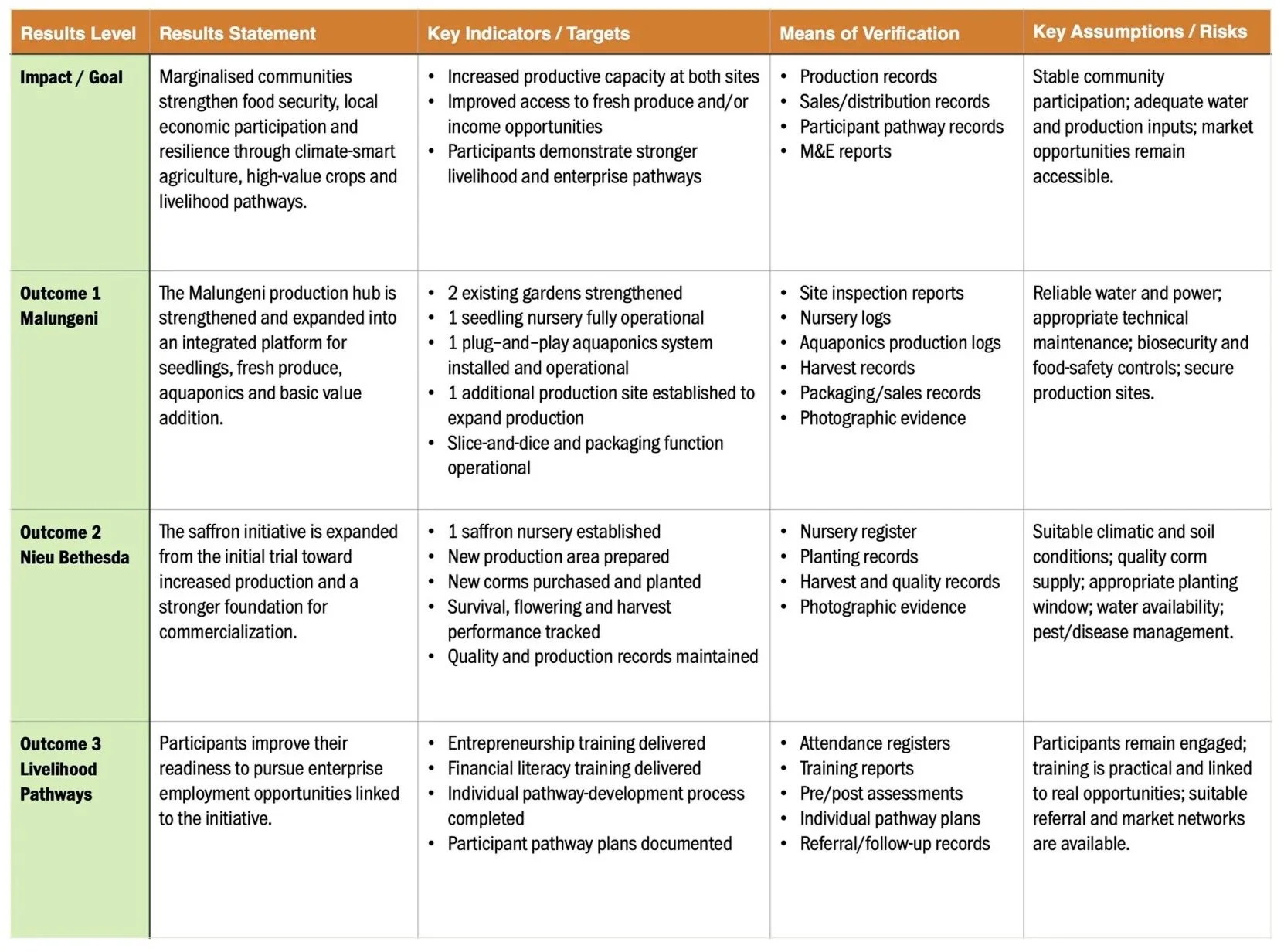
The results framework below provides a clear pathway from planned activities to measurable outputs and outcomes, building on the foundations established during the first phase. It will guide implementation, monitoring and learning across Malungeni and Nieu Bethesda, with a focus on increased food production, operationalisation and expansion of productive assets, value addition, skills development and sustainable livelihood pathways. The framework also provides a basis for tracking progress,
strengthening accountability and adapting implementation based on emerging lessons and community needs.
Personal Stories of 2 Young Malungeni Growers
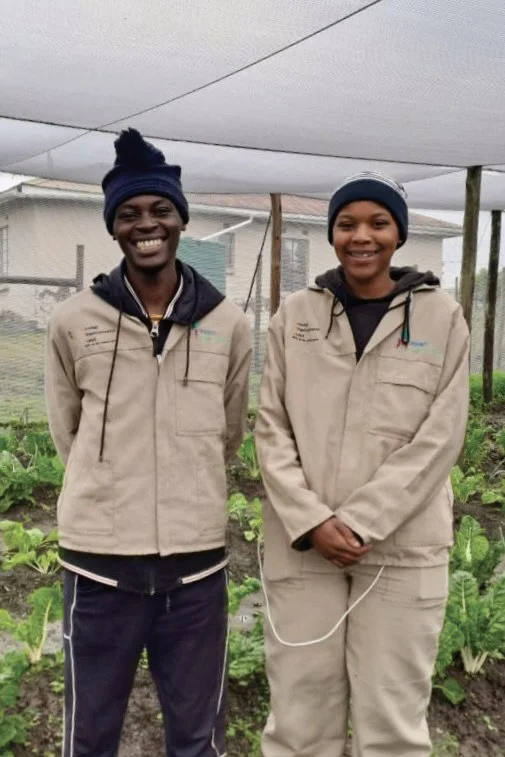
The community and private vegetable gardens of Malungeni are brimming with activity! Arm in Arm's collaboration with INMED has enabled 25 residents of Malungeni to earn incomes growing their vegetables for consumption by schoolchildren, the growers' families, and others in the village who purchase their products. This program, a cornerstone of AIAIA's pivot towards self-reliance and empowerment, is making a huge difference in many lives in the village.
"I have been growing spinach, cabbage, beet root, and onions," explained Liyabona Madikizela, 21, who tends to his garden 5 days a week. Some of his produce helps feed his mother and the two nephews with whom he lives. Other production is donated to the pre-school where teachers prepare meals for the students. Liyabona and all the gardeners are earning a stipend through the South African Employment Initiative that allows them to retain profits from their produce. "I am reinvesting in seeds and tools," Liyabona said. "And I am saving to go to school and study fine art."
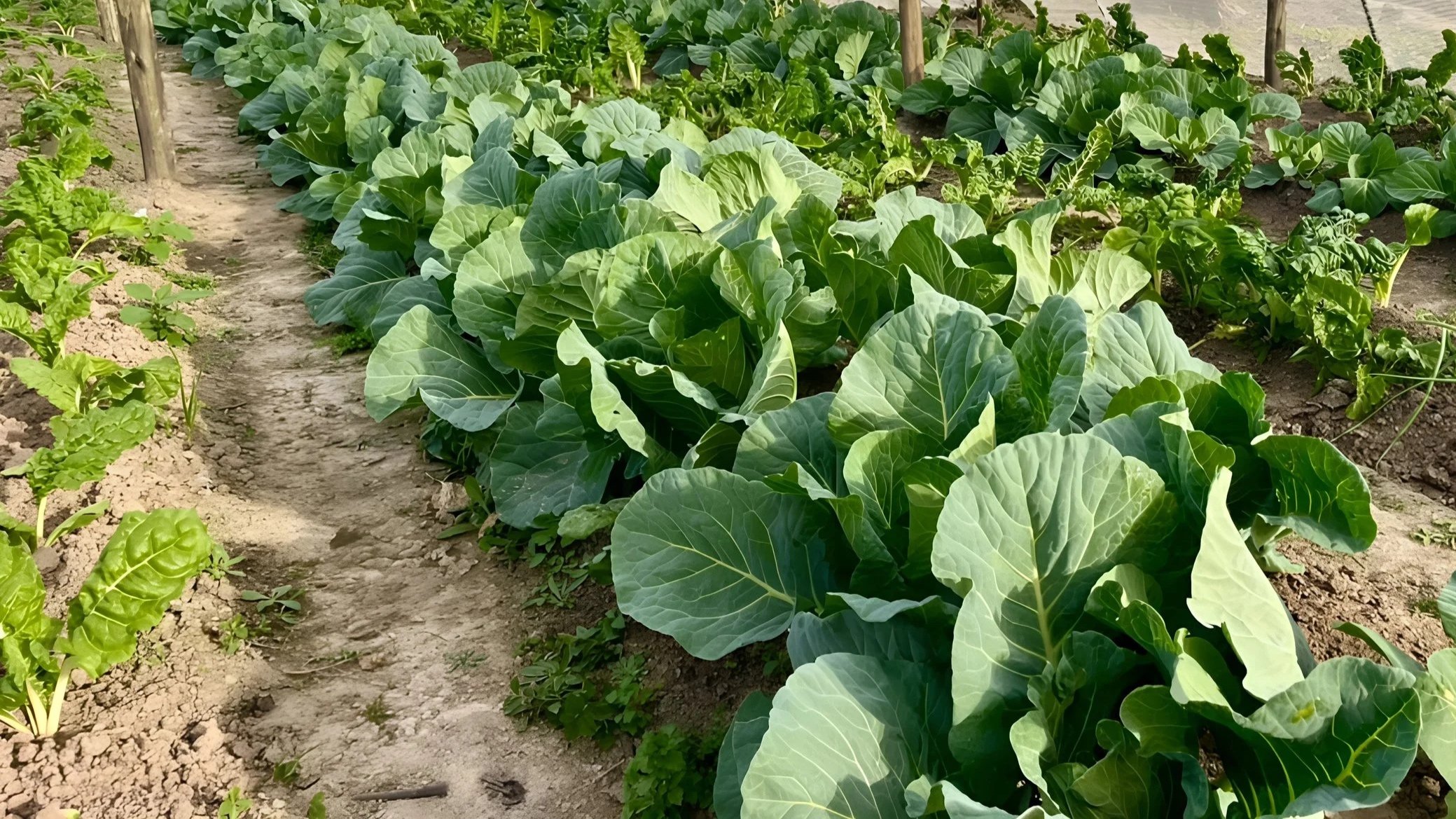
Liyabona expressed his gratitude to the Arm in Arm community. "This is the first time for me to work in a garden," he explained "I am learning many things I did not know. This opportunity also helps youth my age to not get involved in bad activities and stick with working."
Mbali Xapile, also 21, lives with her two children, her parents, and two siblings. In addition to helping feed her own family, she also provides vegetables to elderly residents with various wellness issues. Mbali also participated in a finance course taught by Mamela Njingolo, Arm in Arm's Malungeni Coordinator. That knowledge helped Mbali start her own perfume business. "I am so grateful for the chance to learn how to grow plants and also raise money to start my own business," she said.
Olga Xaplie, a member of AIAIA's Board, proudly observes the gardening activity. "In speaking with the youth," Olga explained, "I was so proud when they said it's a privilege to work in the garden. They feel tired when the day is done, but when the mind goes to sleep, they are thinking of something new for the next day."